What to Do When Your Basement Floods
Basement flooding in Eagle Mountain: the order of steps that protects your family, your belongings and your home while the clock on mold is running.
When your basement floods, shut off power to the area if you can do it safely, stop the water at its source, and call a water damage restoration company right away so drying starts before mold does. Mold can begin growing in 24 to 48 hours on wet drywall, carpet and framing, so the first day matters more than any other.
This guide walks Eagle Mountain homeowners through the steps in the order that protects your safety first, then your belongings, then the structure of the house. Because it is November, we start with the most common local cause this time of year: freezing temperatures that split pipes and overwhelm sump pumps.
Step 1: Make the basement safe before you touch anything
Basement flooding becomes dangerous the moment water reaches an outlet, a power strip or the bottom of your electrical panel. Do not walk into standing water if any part of the basement is still energized.
If the panel is on dry ground upstairs or in a dry corner, switch off the breakers that feed the basement. If the panel itself is wet or you cannot reach it without stepping in water, stay out and call your utility. Never use a standard household vacuum on water, and keep extension cords out of the wet zone.
- Turn off basement breakers only from a dry spot.
- If you smell gas, leave the house and call the gas utility from outside.
- Keep children and pets out of the area, since even shallow water can hide sharp debris.
- Wear rubber boots and gloves if you must enter after the power is confirmed off.
Step 2: Find and stop the source
Stopping the source of a basement flood is the only step that keeps the damage from growing while you wait for help. The cause usually falls into one of four groups: a burst or frozen pipe, a failed sump pump, a water heater or appliance failure, or groundwater and runoff coming through the foundation.
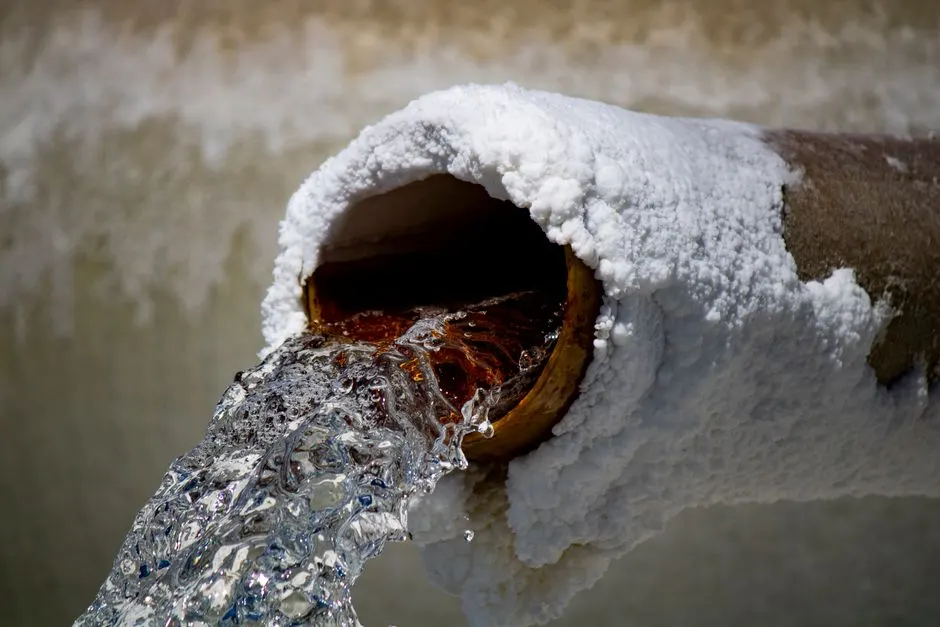
For a supply line break, close the main water shutoff, usually where the line enters the house near the water heater or a utility closet. A winter freeze is the classic trigger here. A pipe in an exterior wall or unheated corner freezes, expands, splits, and then releases water when it thaws. If that sounds like your situation, see our notes on Burst Pipe Water Damage in Eagle Mountain for how that kind of loss is handled.
For a sump pump failure, check whether the pump has power, whether the float switch is stuck, and whether the discharge line outside is frozen solid. A frozen discharge line is a very common winter reason a pump runs but water keeps rising. If the water is coming from a sewer line backup, stop using every drain and toilet in the house and treat the water as contaminated.
How deep is the water, and what kind is it?
Water in a flooded basement is sorted by the industry into three categories under the IICRC S500 standard, and the category decides how the cleanup must be handled. The S500 is the widely used reference standard for professional water damage work, and the categories are general industry information that apply to any restoration job.
- Category 1: clean water from a supply line, a broken water heater or melting indoor ice. It can still turn worse after 48 hours.
- Category 2: gray water, such as washing machine or dishwasher overflow, or a sump pump failure that mixes in soil.
- Category 3: black water, including sewage backup and rising groundwater that has crossed contaminated ground. This is a health hazard.
Depth matters too. One inch of water across a 1,000 square foot basement is roughly 620 gallons, and water weighs about 8.3 pounds per gallon. That is why even a modest flood is too heavy and too widespread to mop up, and why a crew uses powered pumps and extractors for Water Extraction in Eagle Mountain rather than towels and buckets.
Step 3: Document everything before you move it
Before you carry anything out, take photos and short videos of the water line on the walls, the damaged contents, the source of the leak, and any appliance labels. Your insurance company will ask for proof of what was wet and how high the water rose.
Write down a list of damaged items with a rough age for each. Keep any failed part, such as a split pipe section or a broken sump pump, because the adjuster may want to see it. Then call your insurance company to open a claim. Ask them directly what your policy says about water backup and sump pump overflow, because those events are often handled differently from a burst pipe.
How fast do you need to start drying a flooded basement?
A flooded basement should be in active drying within about 24 to 48 hours, because that is the window before mold colonies typically take hold on damp materials. Wet drywall can wick water 12 to 24 inches above the visible waterline, so the wall can look dry at knee height while the lower third is saturated.
While you wait for a crew, you can do a few things that help without causing harm:
- Move small furniture, rugs and boxes to a dry room, stacking wet items on foil or plastic so they do not stain floors above.
- Pull up and set aside any area rugs, but leave wall-to-wall carpet and pad for the crew to assess.
- Run the furnace fan or open an upstairs window only if the air outside is dry. In a Utah November, cold air holds little moisture, so gentle ventilation can help, but do not let the house drop low enough to freeze more pipes.
- Do not turn on a home dehumidifier in standing water. Wait until the water is removed.
Basement moisture that stays above 60 percent relative humidity encourages mold, and a drying target is usually brought down to roughly 30 to 50 percent. That level is hard to reach without commercial equipment, which is why the first call matters. If it is a larger event, such as water across the whole floor plate, our write-up on Basement Flood Cleanup in Eagle Mountain explains what the full process covers.
What a restoration crew does once it arrives
A local restoration crew generally works through the same sequence on a basement flood: extract standing water, remove materials that cannot be dried, set drying equipment, and monitor moisture until the structure reads dry. When you call (385) 481-3042 we connect you with an independent restoration company serving Eagle Mountain, and the crew you are connected with does the hands-on work. We are a referral line and do not employ the technicians ourselves.
In general, a restoration pro typically starts by pumping or extracting the standing water, then uses a moisture meter and sometimes a thermal camera to map where water traveled behind walls and under flooring. Wet carpet pad, soaked insulation and swollen baseboard are usually removed. Then air movers and low-grain refrigerant (LGR) dehumidifiers are placed, and the readings are checked each day. Typical drying runs 3 to 5 days, though thick framing or a deep flood can run longer.
If the loss turns out to be broader than the basement, such as water that moved into the main floor or a flooded yard, a company can scale the work. Our overview of Flood Cleanup in Eagle Mountain covers that larger scope.
Common mistakes to avoid
The most costly basement flood mistakes are waiting to see if it dries on its own, and treating contaminated water like clean water. Both let damage and risk grow quietly.
- Waiting a day or two. Drywall, insulation and carpet pad stay wet and mold becomes likely after 24 to 48 hours.
- Using bleach as a cure-all. Bleach does not dry anything and cannot fix soaked framing. Never mix it with other cleaners.
- Throwing away everything before photographing it. Take pictures first, then discard what is clearly unsalvageable.
- Ignoring a Category 3 loss. Sewage water should not be handled with bare hands or run through a regular shop vacuum.
- Skipping the source. A pump that is still failing or a pipe that is still leaking will refill the room.
- Turning the heat off to save money. In winter, an unheated house is how the next pipe freezes.
Families in nearby Saratoga Springs run into the same winter pattern as new construction settles and sump systems are pushed hard. Our page on Water Damage Restoration in Saratoga Springs covers that part of the service area, and the steps in this guide apply there as well.
When to call a professional
Call a water damage restoration company right away if the water is deeper than an inch or two, if it has been sitting more than a day, if the basement is finished with drywall and carpet, or if there is any chance it is sewage. For a small spill on bare concrete that you can pull up with a wet vacuum in one pass, you may be able to handle it yourself.
Water Cleanup Eagle Mountain exists to make that first call simple. Instead of searching and comparing companies while your floor is under water, you reach one number and we connect you with a local restoration company that serves your area, including Lehi and nearby neighborhoods. You can read more about how those jobs work on our page for Water Damage Restoration in Lehi.
If wet materials sit past the first couple of days, the next job on the list is often mold. The same companies that dry the structure can usually assess it too, and our page on Mold Remediation in Eagle Mountain explains what that stage looks like.
Frequently Asked Questions
Can I stay in my house with a flooded basement?
Usually yes, if the electrical panel is dry, the water was clean and there is no gas smell. Stay out of the basement and avoid it entirely if the water may be sewage or if power is still on to wet outlets.
How long does a flooded basement take to dry?
Typical professional drying takes 3 to 5 days after the standing water is removed. Deep floods, concrete, thick framing and cold weather can add time, so the crew confirms with moisture readings rather than a calendar.
Will homeowners insurance cover a flooded basement?
It depends on the cause and your policy. Sudden burst pipes and appliance leaks are commonly covered, while groundwater and sump pump backup often need a separate endorsement. Call your insurer and ask before you assume.
Should I rip out carpet myself?
Photograph it first. Carpet that sat in clean water for under 24 hours can sometimes be dried, but carpet pad is usually discarded. Anything touched by sewage should be removed by a professional.
What if my sump pump keeps running but the water rises?
Check the outside discharge line for a frozen section, since ice blockage is a frequent winter cause. If the line is clear and the water still rises, the pump may be undersized or failing and needs service.
Get help with Water Damage Restoration in Eagle Mountain
If your basement is flooded right now, do not wait for it to dry on its own. Call (385) 481-3042 and we connect you with a local restoration company that can get the water out and the drying started.